
 Image 1 of 1
DIURIVET acts by modifying sodium reabsorption in the ascending limb of the loop of Henle and in both the distal and proximal convoluted tubules, causing sodium to draw fluids with it. This results in an increased filtration volume and inhibition of sodium reabsorption, with a consequent reduction in chloride and water reabsorption. DIURIVET is effective even when glomerular filtration is limited.
DIURIVET is useful in cases of fluid accumulation, including:
Mammary gland (physiological and pathological edema)
Scrotum and prepuce
Lungs and bronchi
Extremities and body cavities
In cases of pulmonary edema (pulmonary congestion, ascites), intravenous injection provides immediate relief of edema symptoms of cardiac origin.
Pulmonary edema caused by acute intoxication also responds to treatment; however, in some cases it may be advisable to double or triple the initial dose at the start of therapy.
In renal edema, DIURIVET produces an effective diuretic response even with markedly restricted glomerular filtration, showing notable efficacy in chronic glomerulonephritis.
Due to its diuretic action, DIURIVET is also effective in intoxications of various origins (dietary, stimulant drugs, auto-intoxication of intestinal or myogenic origin, hemolytic diseases, etc.). An initial intravenous injection, followed by intramuscular administration on subsequent days until the desired effect is achieved, produces conclusive results.
Dosage and Route of Administration
Cattle, horses, goats, sheep, and swine: 2.5 mg per kg of body weight, equivalent in practice to 1 mL per 8 kg of body weight, every 6 hours, administered intramuscularly, or as directed by the attending veterinarian.
Dogs: 2–6 mg per kg of body weight every 8–12 hours.
Cats: 1–4 mg per kg of body weight every 8–12 hours.
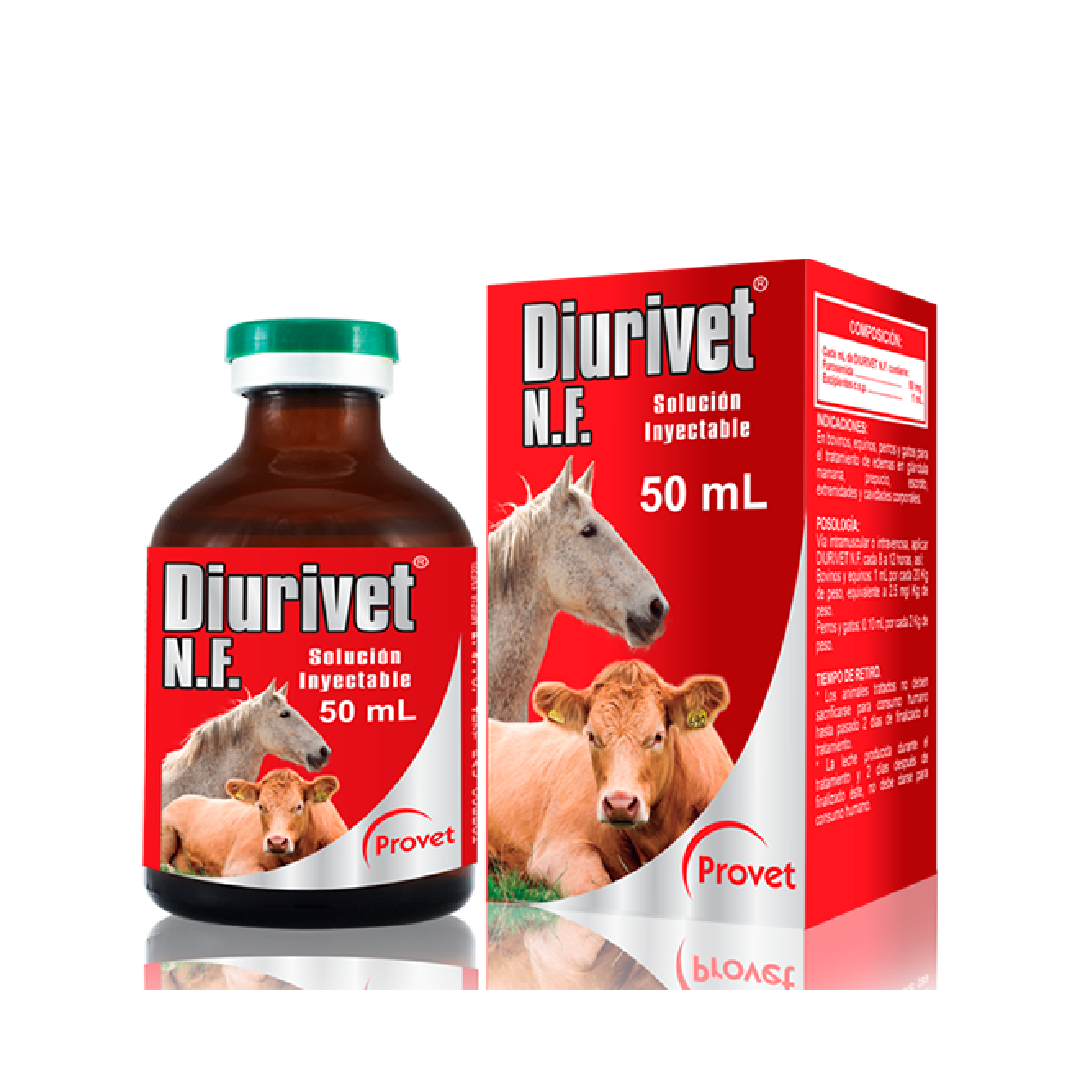
Presentations: Glass vial: 50 mL.
DIURIVET acts by modifying sodium reabsorption in the ascending limb of the loop of Henle and in both the distal and proximal convoluted tubules, causing sodium to draw fluids with it. This results in an increased filtration volume and inhibition of sodium reabsorption, with a consequent reduction in chloride and water reabsorption. DIURIVET is effective even when glomerular filtration is limited.
DIURIVET is useful in cases of fluid accumulation, including:
Mammary gland (physiological and pathological edema)
Scrotum and prepuce
Lungs and bronchi
Extremities and body cavities
In cases of pulmonary edema (pulmonary congestion, ascites), intravenous injection provides immediate relief of edema symptoms of cardiac origin.
Pulmonary edema caused by acute intoxication also responds to treatment; however, in some cases it may be advisable to double or triple the initial dose at the start of therapy.
In renal edema, DIURIVET produces an effective diuretic response even with markedly restricted glomerular filtration, showing notable efficacy in chronic glomerulonephritis.
Due to its diuretic action, DIURIVET is also effective in intoxications of various origins (dietary, stimulant drugs, auto-intoxication of intestinal or myogenic origin, hemolytic diseases, etc.). An initial intravenous injection, followed by intramuscular administration on subsequent days until the desired effect is achieved, produces conclusive results.
Dosage and Route of Administration
Cattle, horses, goats, sheep, and swine: 2.5 mg per kg of body weight, equivalent in practice to 1 mL per 8 kg of body weight, every 6 hours, administered intramuscularly, or as directed by the attending veterinarian.
Dogs: 2–6 mg per kg of body weight every 8–12 hours.
Cats: 1–4 mg per kg of body weight every 8–12 hours.
Presentations: Glass vial: 50 mL.