
 Image 1 of 1
Anticholinergic injectable solution.
COMPOSITION:
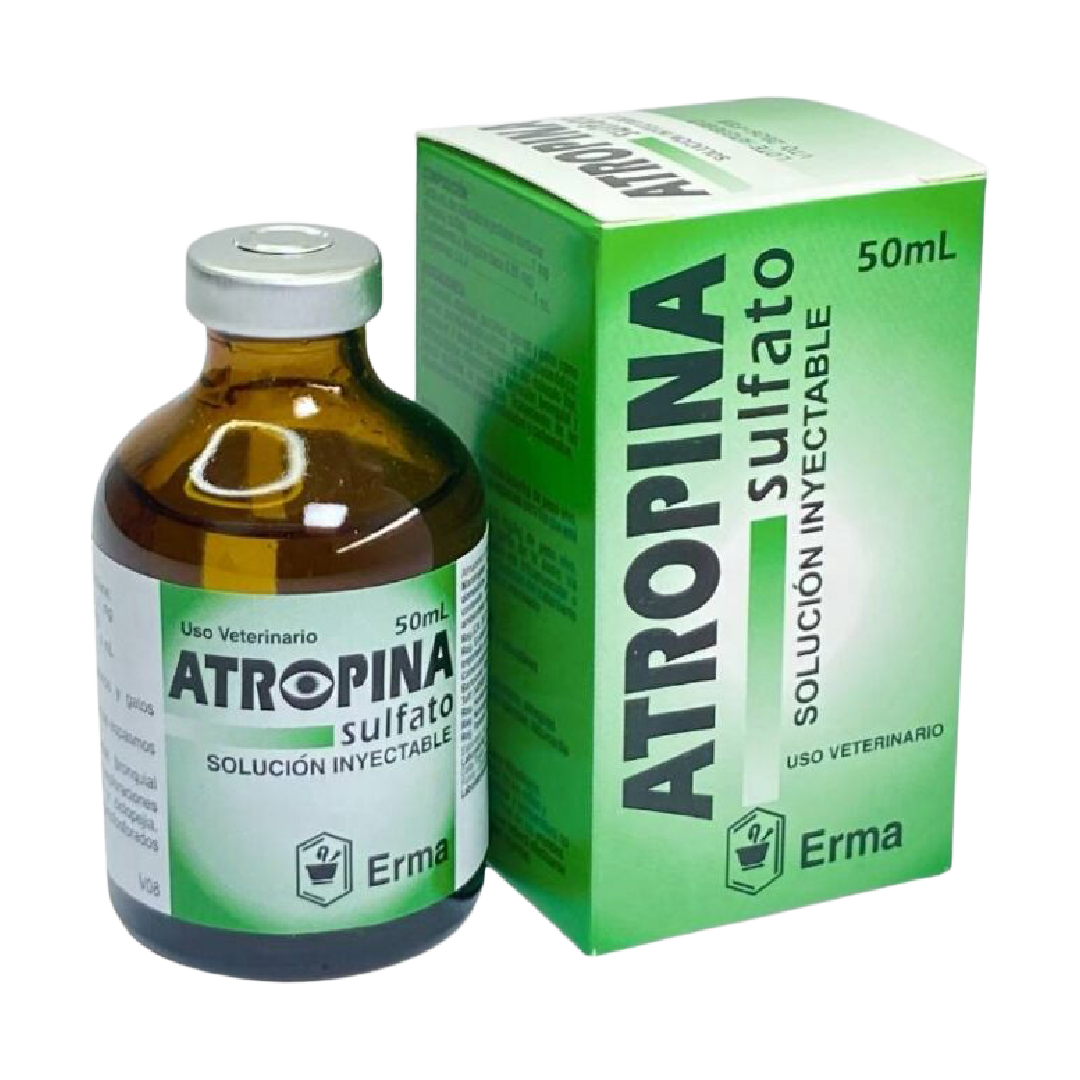
Each mL of ATROPINE-Erma® contains:
Atropine sulfate 1 mg
PROPERTIES:
Anticholinergic / Antimuscarinic: Competitively inhibits muscarinic receptors, reducing or blocking the effects of acetylcholine on smooth muscle, glands, heart, lungs, and the central nervous system.
Preanesthetic: Reduces gastrointestinal motility caused by vagal reflexes, stabilizes cardiac function, decreases bronchial and salivary secretions, and prevents anesthetic-induced bronchoconstriction.
Cardiovascular: Prevents vagal syncope and severe bradycardia by maintaining heart rate and blood pressure during anesthesia.
Genitourinary: Relaxes urethral smooth muscle.
Antidote: Used in intoxications caused by cholinergic agonists and acetylcholinesterase inhibitors (organophosphates, carbamates, muscarine). Reduces bronchial and salivary secretions, prevents bradycardia, convulsions, diarrhea, and excessive gastrointestinal motility.
Ophthalmic: Produces mydriasis by paralysis of the iris sphincter; useful for internal ocular examination.
INDICATIONS:
Parasympatholytic, antimuscarinic, and anticholinergic agent.
DOSAGE AND ADMINISTRATION:
Applicable to cattle, horses, sheep, goats, swine, dogs, and cats.
Preanesthetic: 0.044 mg/kg (1.1 mL per 25 kg body weight)
Antidote for intoxication: 0.2 mg/kg body weight (¼ of the dose IV and ¾ IM or SC)
CONTRAINDICATIONS AND PRECAUTIONS:
Do not use in animals with glaucoma due to increased intraocular pressure.
Use with caution in horses due to the risk of paralytic ileus.
Use cautiously in geriatric patients.
ADVERSE EFFECTS:
Dry mouth and throat, dysphagia, constipation, tachycardia, photophobia, visual disturbances, depression, paralysis, bronchodilation, excitation, seizures, and increased blood pressure.
PRESENTATION:
Vials of 10 mL and 50 mL.
USE IN: Cattle, dogs, cats, sheep, and swine.
Anticholinergic injectable solution.
COMPOSITION:
Each mL of ATROPINE-Erma® contains:
Atropine sulfate 1 mg
PROPERTIES:
Anticholinergic / Antimuscarinic: Competitively inhibits muscarinic receptors, reducing or blocking the effects of acetylcholine on smooth muscle, glands, heart, lungs, and the central nervous system.
Preanesthetic: Reduces gastrointestinal motility caused by vagal reflexes, stabilizes cardiac function, decreases bronchial and salivary secretions, and prevents anesthetic-induced bronchoconstriction.
Cardiovascular: Prevents vagal syncope and severe bradycardia by maintaining heart rate and blood pressure during anesthesia.
Genitourinary: Relaxes urethral smooth muscle.
Antidote: Used in intoxications caused by cholinergic agonists and acetylcholinesterase inhibitors (organophosphates, carbamates, muscarine). Reduces bronchial and salivary secretions, prevents bradycardia, convulsions, diarrhea, and excessive gastrointestinal motility.
Ophthalmic: Produces mydriasis by paralysis of the iris sphincter; useful for internal ocular examination.
INDICATIONS:
Parasympatholytic, antimuscarinic, and anticholinergic agent.
DOSAGE AND ADMINISTRATION:
Applicable to cattle, horses, sheep, goats, swine, dogs, and cats.
Preanesthetic: 0.044 mg/kg (1.1 mL per 25 kg body weight)
Antidote for intoxication: 0.2 mg/kg body weight (¼ of the dose IV and ¾ IM or SC)
CONTRAINDICATIONS AND PRECAUTIONS:
Do not use in animals with glaucoma due to increased intraocular pressure.
Use with caution in horses due to the risk of paralytic ileus.
Use cautiously in geriatric patients.
ADVERSE EFFECTS:
Dry mouth and throat, dysphagia, constipation, tachycardia, photophobia, visual disturbances, depression, paralysis, bronchodilation, excitation, seizures, and increased blood pressure.
PRESENTATION:
Vials of 10 mL and 50 mL.
USE IN: Cattle, dogs, cats, sheep, and swine.