
Internal Parasites Don’t Only Affect Digestion
When many farmers think about internal parasites, they often think only about the stomach or intestines. However, internal parasites can affect much more than digestion. In cattle, sheep, and other grazing animals, parasites may impact growth, body condition, breathing, feed efficiency, and overall productivity.
Gastrointestinal parasites are common in ruminants, including cattle and sheep, and they can affect animal health depending on the level of infection, age, nutrition, immunity, and farm conditions. The MSD Veterinary Manual describes gastrointestinal parasites of ruminants as an important veterinary topic, especially for grazing animals.
Why parasites matter on the farm
A parasite problem may not always start with dramatic signs. Sometimes the first signs are slow growth, poor weight gain, rough coat, or animals that look less active. For farmers, this can affect productivity over time.
In Belize, where cattle and sheep commonly graze outdoors, exposure to parasite eggs and larvae in pasture can be common. Warm and humid conditions can also support parasite survival in the environment. This makes parasite control an important part of herd and flock management.
Common effects of internal parasites
Internal parasites may contribute to:
Reduced nutrient absorption
Poor body condition
Weight loss or slow weight gain
Diarrhea
Weakness
Reduced feed efficiency
Respiratory signs in some parasite infections
Lower productivity
Young animals, stressed animals, and animals with poor nutrition may be more vulnerable to the effects of parasites.
Not all internal parasites affect the same area
Some parasites mainly affect the stomach and intestines. Others may affect different organs, such as the liver or lungs. This is why farmers should not assume that parasite control is only about treating diarrhea. For example, liver flukes are also recognized as important parasites in ruminants, and the MSD Veterinary Manual includes them as a specific concern in cattle and other ruminants.
Better control starts with a plan
Good parasite control is not only about giving a dewormer. A strong program may include pasture management, proper nutrition, correct product selection, accurate dosing, and veterinary advice.
Farmers can support better control by avoiding overstocking, rotating grazing areas when possible, keeping young animals in cleaner pastures, using the correct dose based on weight, and following label directions carefully.
Product recommendation
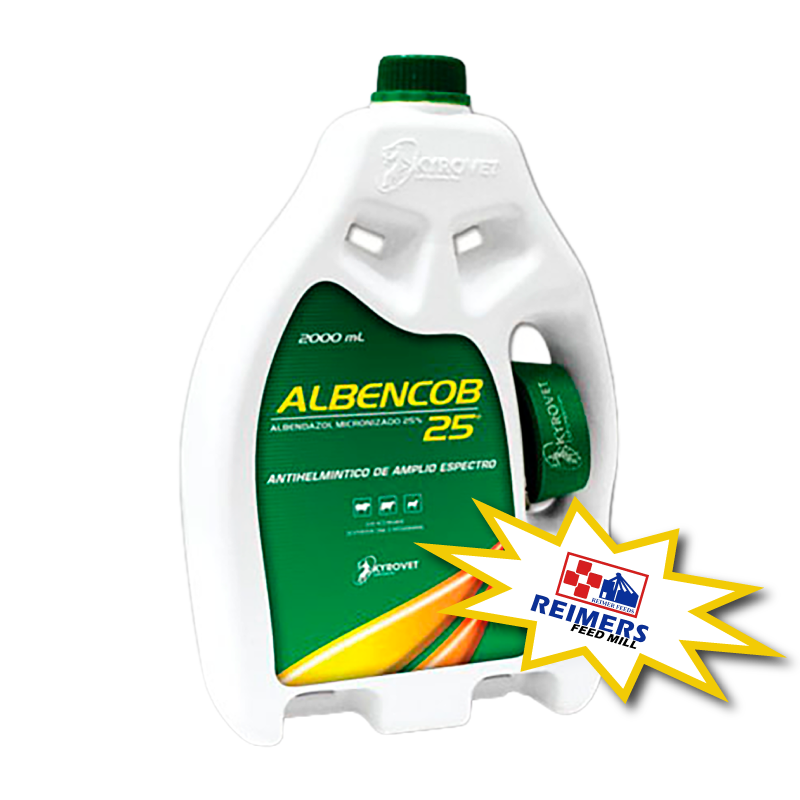
For cattle and sheep, Albencor® 25 is a useful option for internal parasite control. It supports strategic deworming programs and helps farmers manage parasite challenges that can affect digestion, growth, body condition, and productivity.
Use responsibly, follow label directions, and consult a veterinarian or trained animal health professional for the best timing and dosage program.
Available at Reimers Feed Mill stores across Belize.
Sources: MSD Veterinary Manual — Overview of Gastrointestinal Parasites of Ruminants; MSD Veterinary Manual — Common Gastrointestinal Parasites of Cattle.